

WATER HARVESTING STRATEGIES FOR ADAPTING TO CLIMATE CHANGE OF MAASAI FARMERS AT ISINYA, KAJIADO COUNTY, KENYA
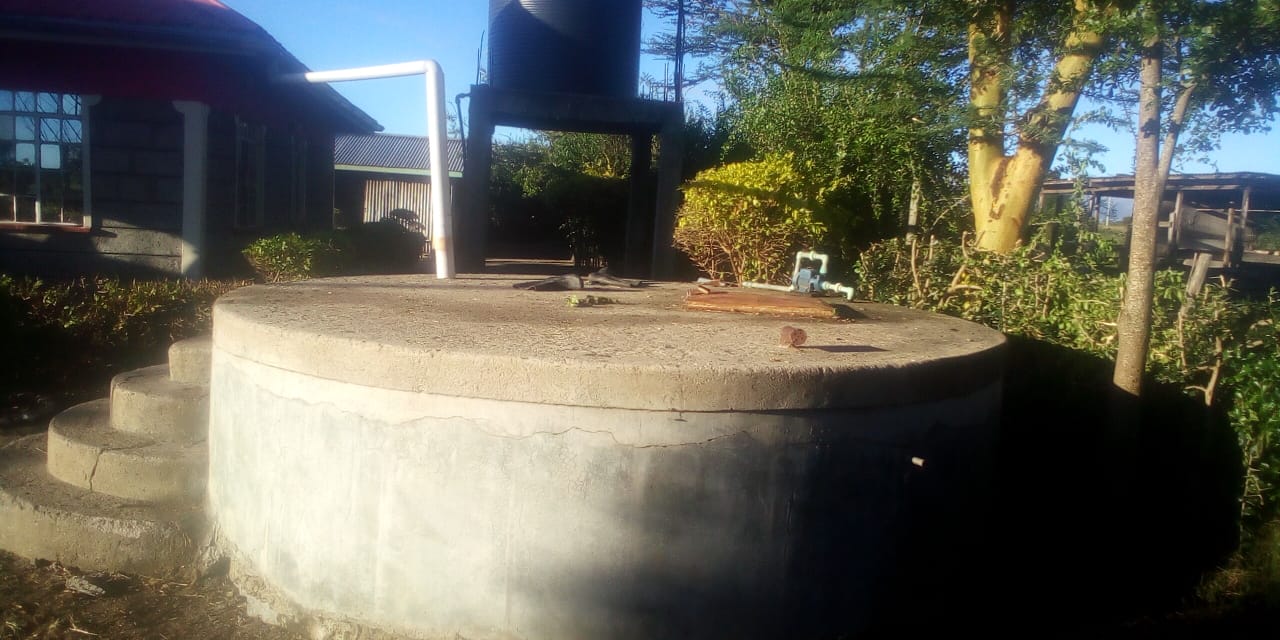
Water harvested from the house roof is collected into an underground tank and later pumped with an electronic machine for domestic use.
CLIMATE
CHANGE IMPACT ON WATER AVAILABILITY
Due to climate change, the following impacts
on water availability have been noted over the years:-
1. Erratic
rainfall pattern that is unpredictable for crop and fodder production.
2. High
intensity with low duration of rainfall causing soil erosion, floods and
siltation.
3. Prolonged
drought which occurs regularly resulting to food insecurity.
4. Drying
of permanent and seasonal rivers, springs, shallow wells and boreholes.
5. Flooding
in Arid and Semi-arid areas resulting to human, livestock, wildlife displacement
and death.
6. Famine
affecting human, livestock, and wildlife conflicts.
7. High
evapotranspiration rates resulting to wilting and eventually dying of water
pans and plants.
8. Increase
of dry days and decrease in wet days within a given season resulting to crop
failure.
9. More
time and energy spent by mostly women fetching water far away (8 hours a day).
10. High
incidence of water diseases in humans.
WATER
HARVESTING TECHNOLOGIES APPLICABLE TO THE MASAI FARMERS
1) Rain
Water Roof Catchment Harvesting Technology.
This water harvesting technology is normally used for domestic use. It involves a structure with corrugated iron sheets, gutters, and storage facilities like concrete tanks, metallic tanks, plastic tanks, underground tanks, water pans, and water ponds covered with polythene lining.
2) Surface
Water Harvesting Technology.
This water harvesting technology involves harvesting road runoff. It is common here at Isinya Location, commonly used by Masai pastoralists in Kajiado County.
This includes run-off harvesting into terraces, retention ditches bends, rock catchment and dams.
Underground Storage: This water is usually used for irrigation, livestock and wildlife water supply. Micro basins water harvesting is covered by hard polythene covering lining, especially in sloppy areas for crops and fruit trees production.
Motorized pumps and Solar Energy are commonly used to pump water from dams and rock catchments.
3) Ground Water Harvesting Technology.
Borehole pumps, manual pumps (Rope, washer pump) subsurface sand dams and springs. Borehole water is used for both domestic and irrigation purposes.
However, sampling and analysis is important aspect for human, livestock and irrigation use. This is the best method farmers can achieve in order to compete with the incoming investors of big farms and Flower Companies which drill many boreholes hence reducing the water table ecosystem.
ADVANTAGES OF
WATER HARVESTING/ WATER PONDS TO THE COMMUNITY
1.
Domestic
Use:- Clear safe water availability at household levels. Reduce the
occurrences of waterborne diseases.
2. Energy Saving:- Saves time and energy normally spent when fetching water from distant water sources, Saves money,- reduce the production role/tasks for women.
3.
Increase
of Food Security:- Production of food & crops at lower cost
availability at the household level.
4.
Increase
Household Income – Through saving cost and sales of surplus farm products,
by increasing product quality and quantity.
5.
The
water pond will make a good ‘demo’ garden - to plan a crop nursery for
capacity building for the local Masai Community and the production of different
varieties of seeds resistant to drought season.
6. Livestock Production:- Increase the quality of pasture (fodder) and drinking water. Increase in livestock enterprises, poultry, fisheries, and other non-conventional livestock.
Water harvesting techniques, soil moisture conservation, keeping small animals that consume less and drinking less water, planting crops that mature fast enough to escape the drought period, and practicing organic farming are lessons we have learned from Dr. Anita Handa.
Thank you also to our supporting friends of
Dr. Anita Handa, who made good contact to partner with Mr. Bijan Danesh and
Martin for financial support to buy seeds and fruit trees which made a
tremendous change to the Thirty Masai pastrolist farmers at Isinya.

Water collection tank for farm use.
We cooperate together with a Community Based Organization started by Dr. Anita Handa and coordinated by a local church Reverend, Rev. Joshua Kikayaya “Chakula Kwetu Sisi” (Food for us) a reality to food security to the community despite global climate change.